

Milky Way season on the north shore of Lake Superior has now entered the reasonable time, but it won’t last long.
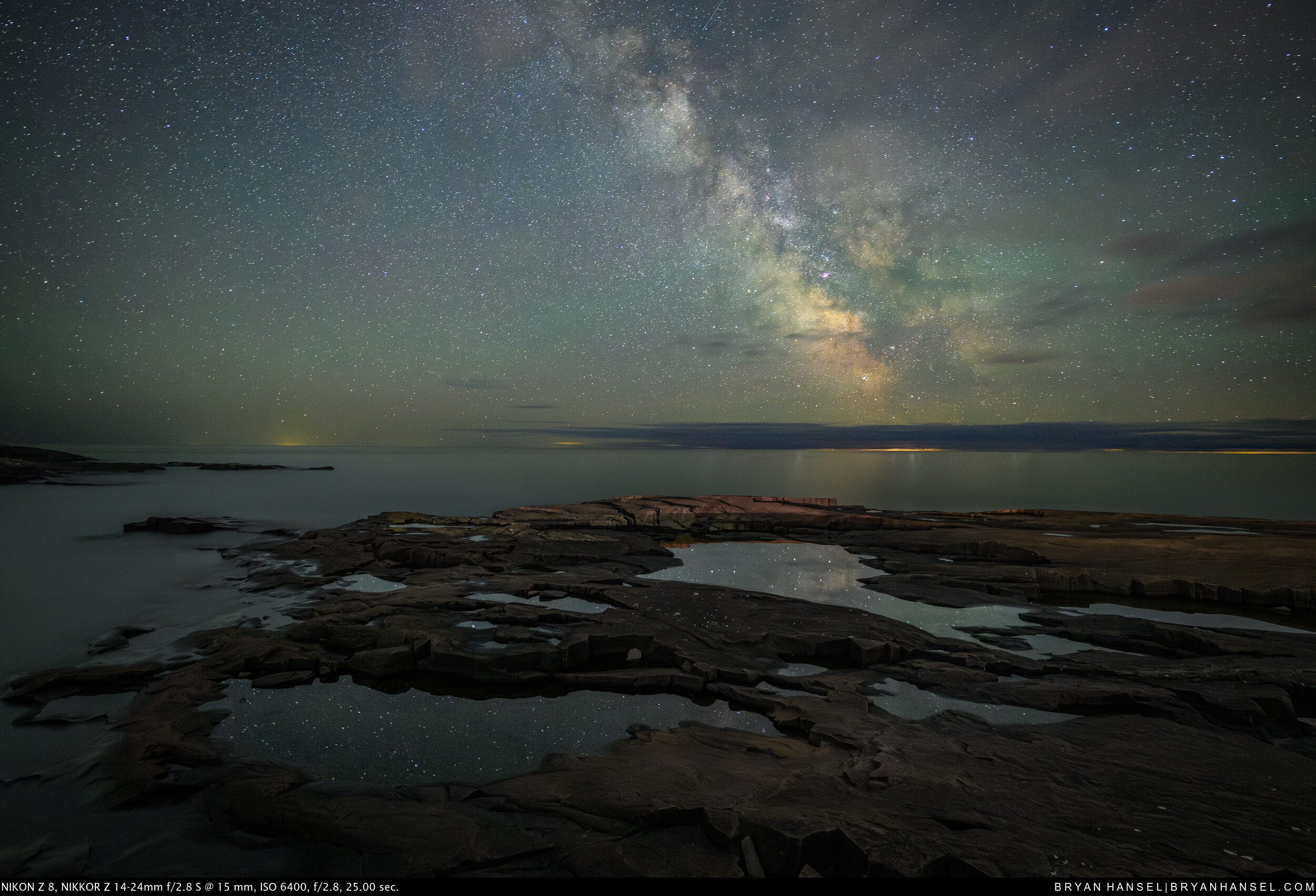
During the last new moon in Grand Marais, the Milky Way’s core started to rise above the horizon at the reasonable time. By reasonable, I mean 11:30pm. By August, it’ll be 10:30 pm, and by September, it’ll be 9:12pm. Next month in June, because we have such long days and short nights, it will paradoxically not be fully dark until 12:09am, so while the core rises at a reasonable time, it won’t be visible.
Thus is the struggle for Milky Way photographers: stay out late and shoot until morning.
This year I’ve been fascinated by calm wave pools reflecting the stars. I returned to the spot in the opening photo to get reflections in both the pools. The first morning, it was just before the end of night and one puddle was reflecting clouds as you can see below. The next night that I went, it was perfect.
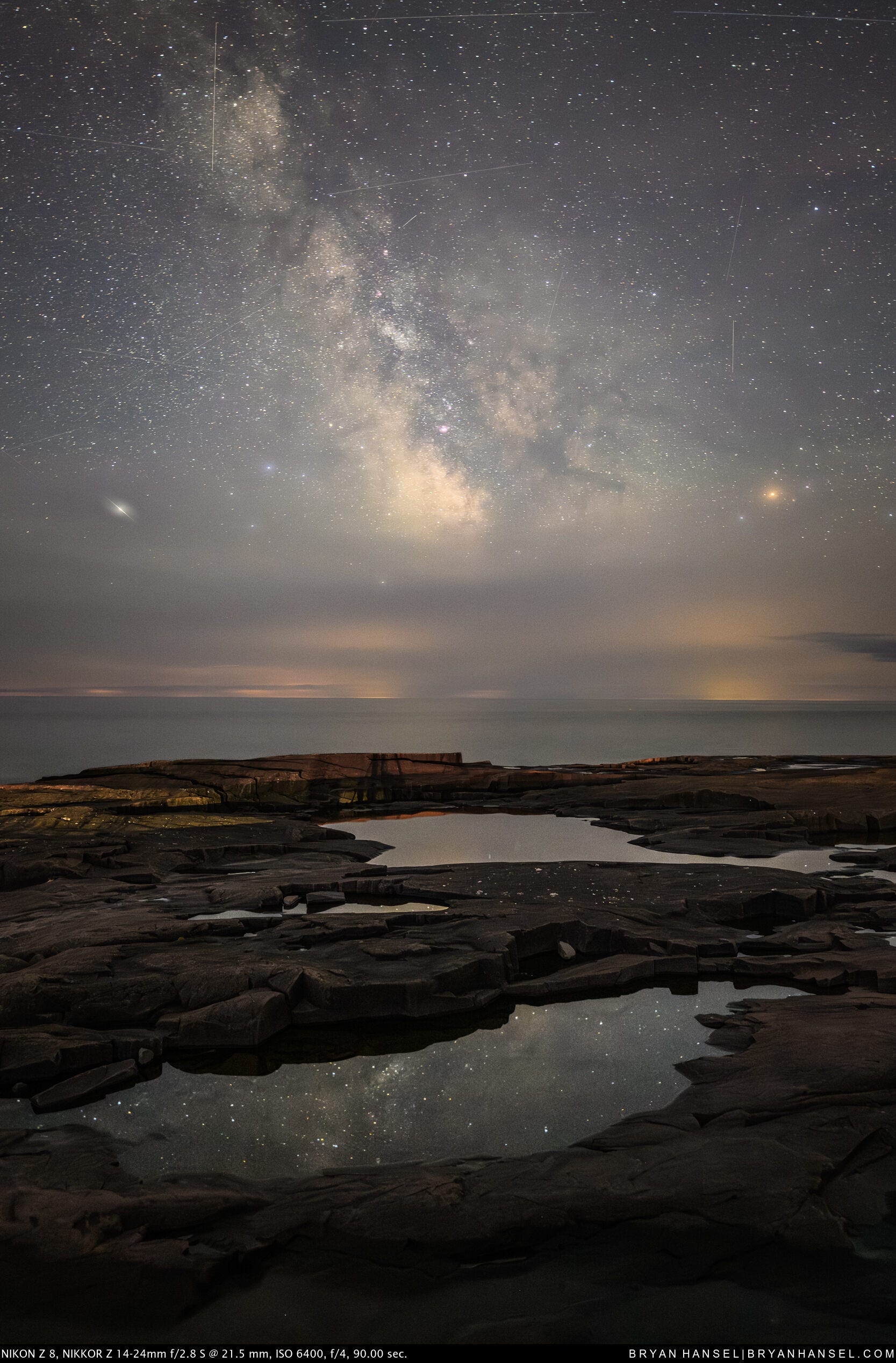
In this second photo, you’ll also notice the number of satellites in the sky. That’s too many for my taste, but when it gets close to the edges of the day, the rising sun hits the satellites while the ground is still in the dark. With more and more satellites launched into orbit each week it’s only going to get worse for photography. Already, it’s nearly impossible to take a 20-second photo without getting a satellite in it. Just 10 years ago, within a few photos you’d have a shot without a satellite in it. We live in the dusk times of easy night photography.
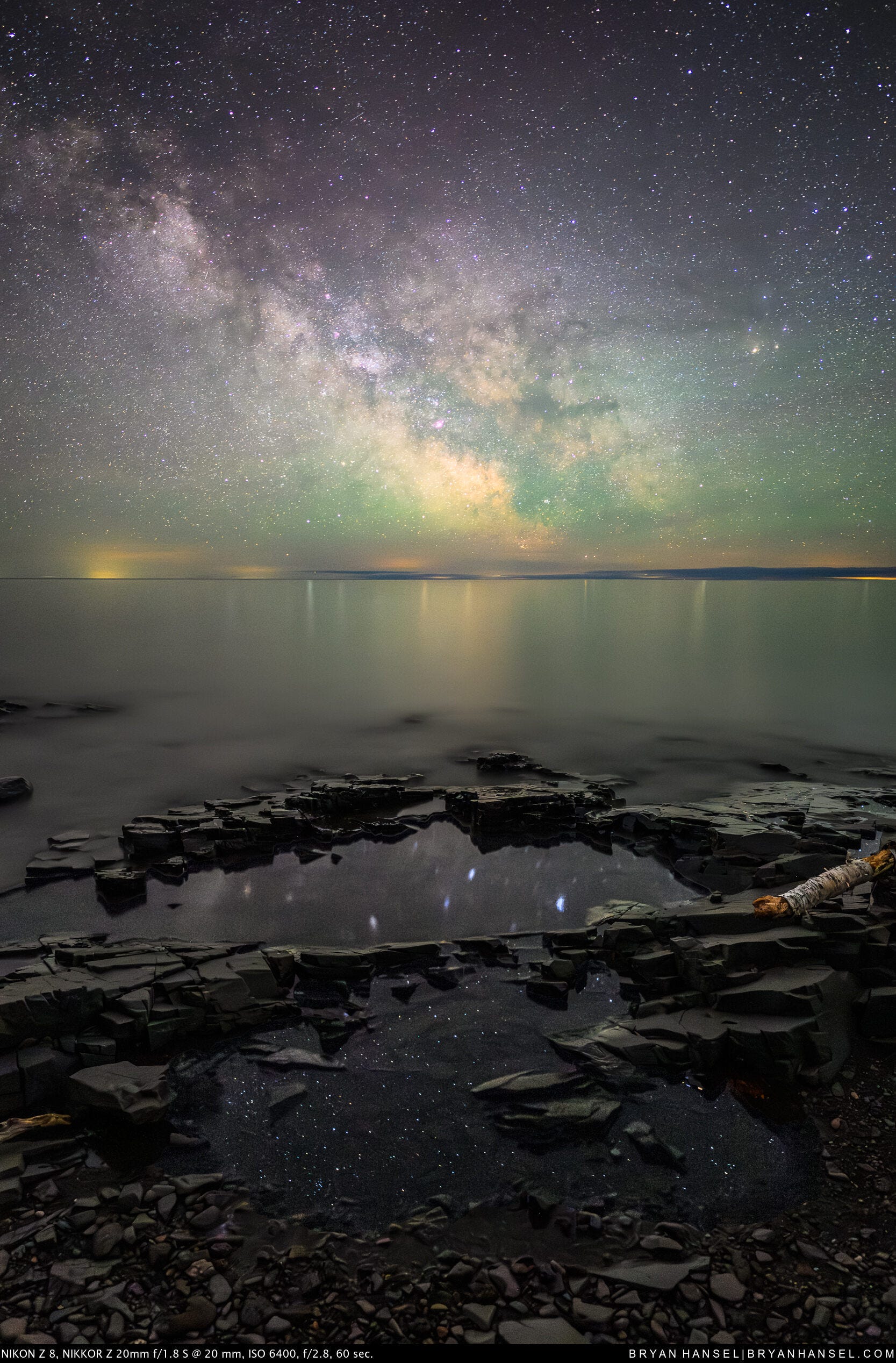
The above find was wild. One of the wave pools was just inches higher than the other. It had perfectly reflected stars! Waves washed into the lower pool causing the stars to blur. The big lake was so wavy, it blurred the star light into streaks.
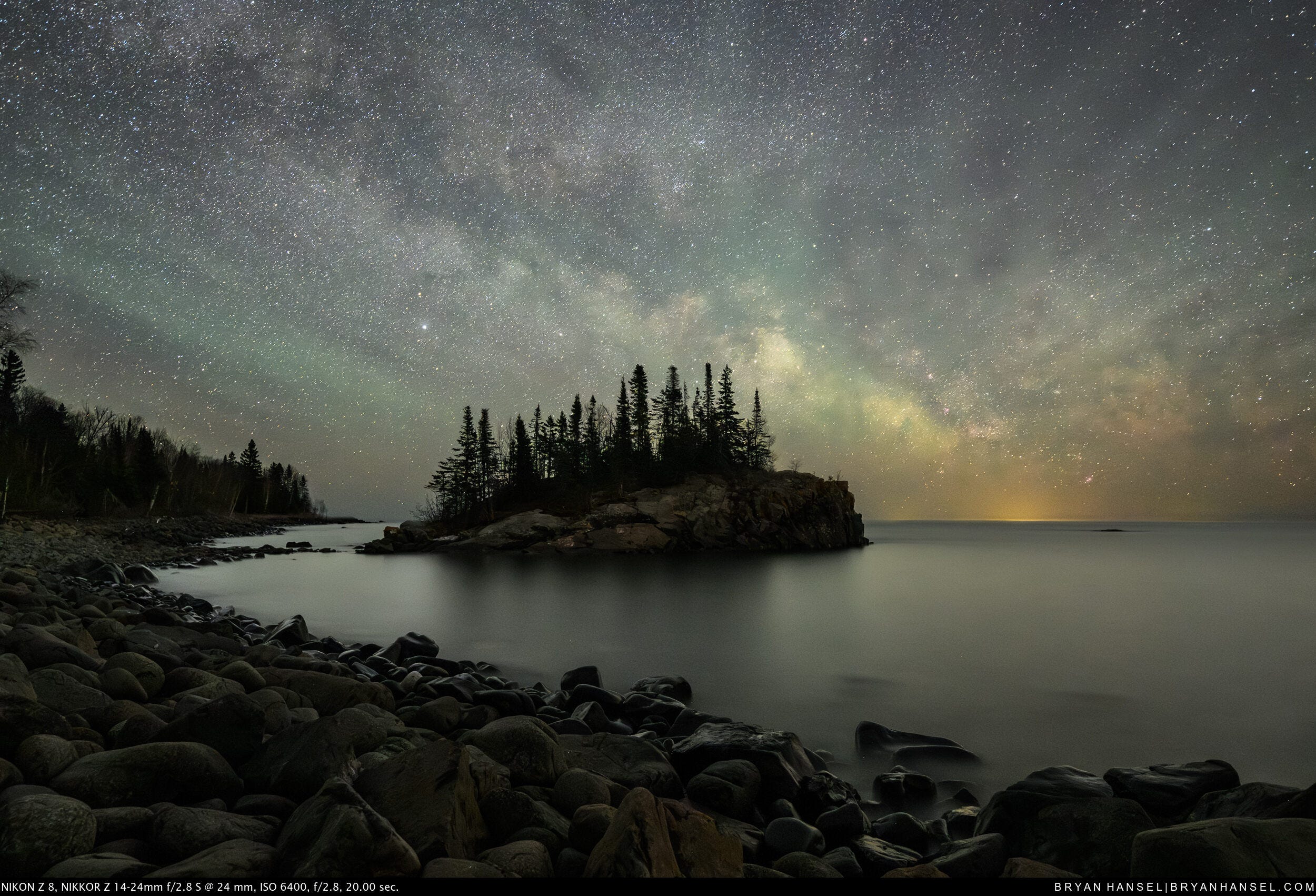
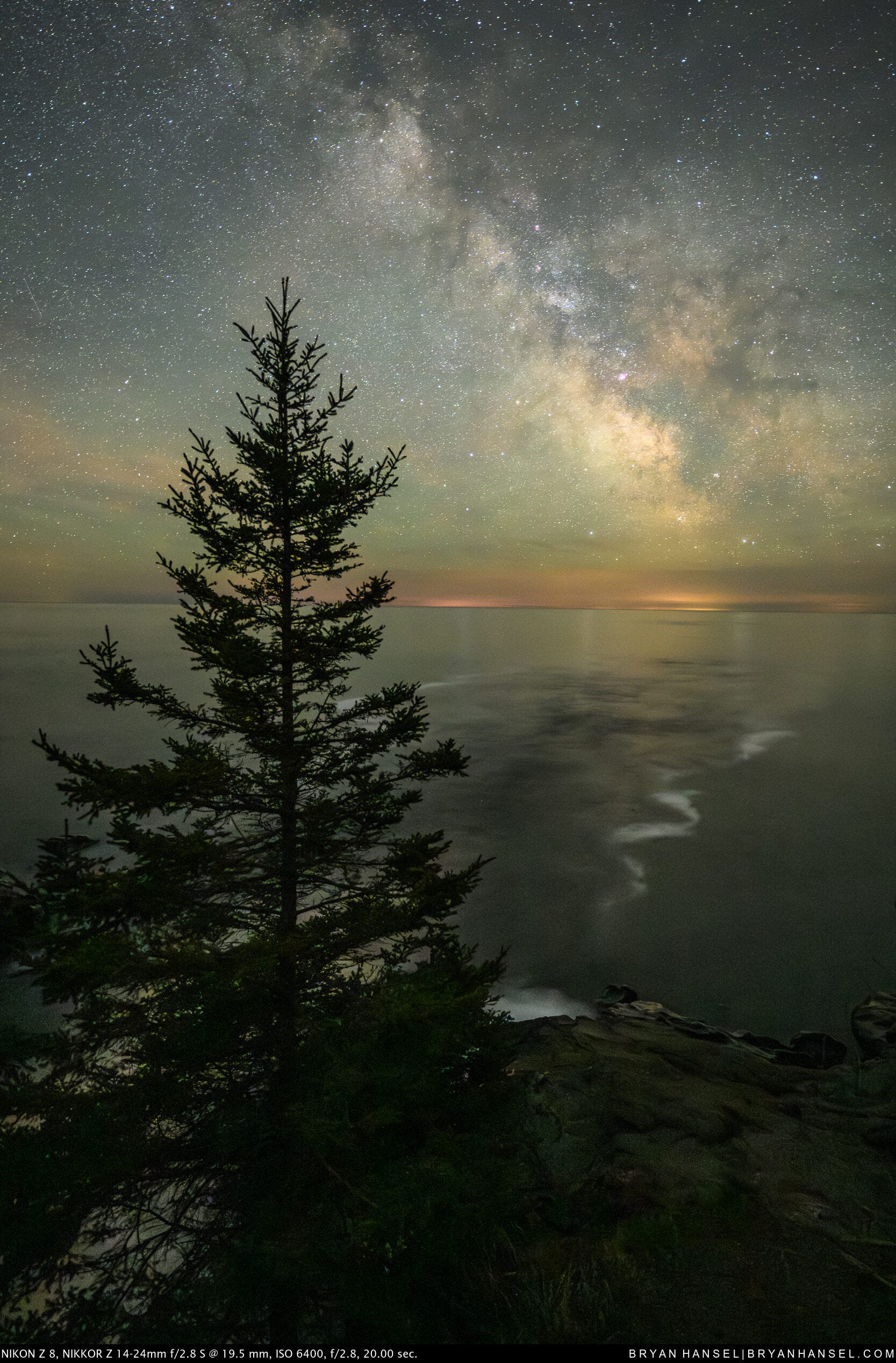
Streaks of light across the water aren’t the only streaks that you see during the night. In the above image, the cloud-like formations in the sky that look like streaks are airglow. Airglow is a faint, natural luminescence emitted by the Earth's upper atmosphere. What happens is the sun warms up the particles in the atmosphere, and they get all excited. As they bounce into each other, they emit the glow that’s usually green. It's like a mosh pit in space.
Northern lights are similar in that the sun hacks a loogie in the form of a coronal mass ejection (CME) at us. Basically, trying to kill us with its power. When the CME hits our atmosphere all the particles get frightened, bounce around and run into each other in terror, and that creates the glowing lights.
It looks pretty though even if it could kill us.
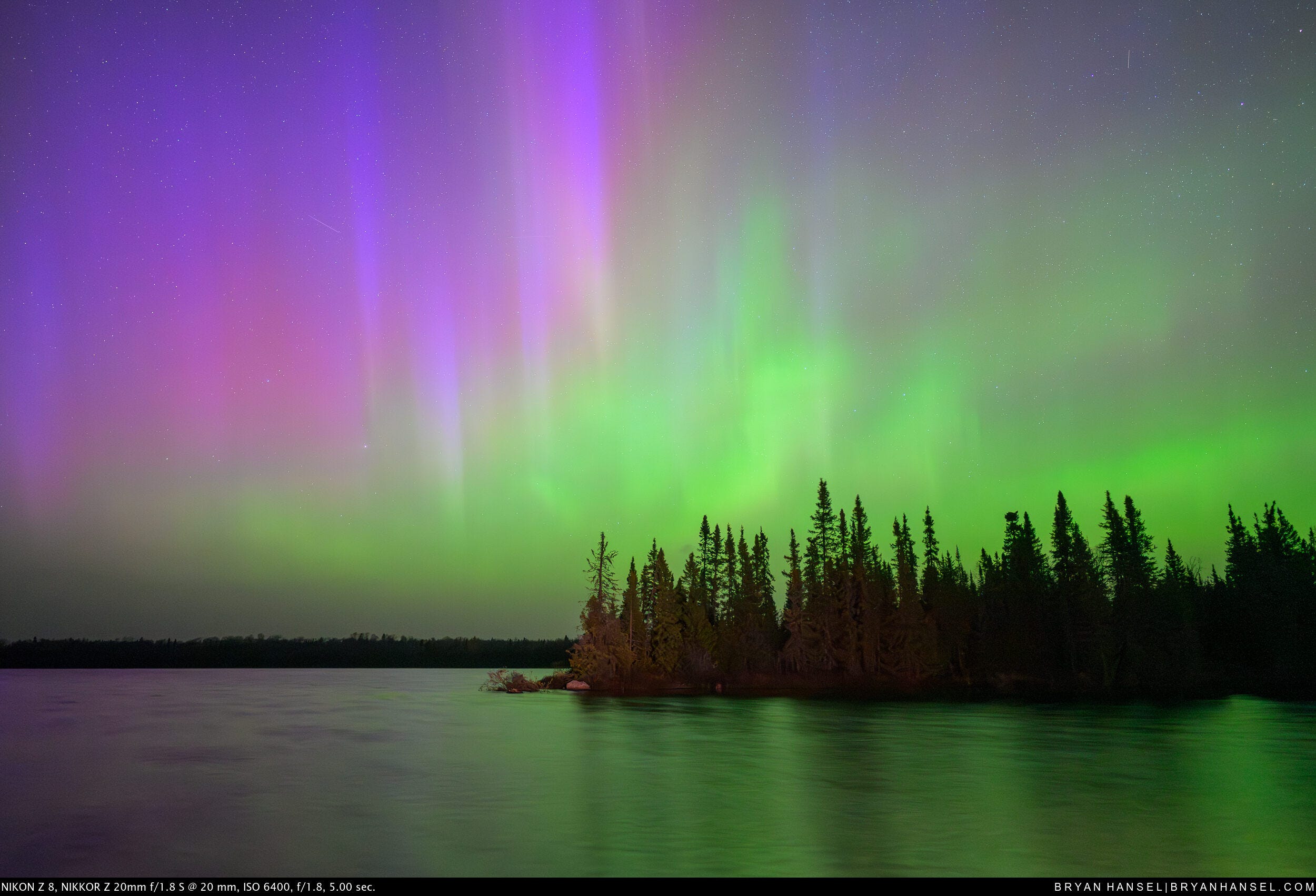
While I like seeing the northern lights, I love photographing the stars. I especially like this new-ish style of night photography that everyone has seemed to gravitate to that is basically a landscape-style composition that happens to have the Milky Way in it where the sunrise or sunset would normally go.
I’m a landscape photographer, so it appeals to my personal preferences. It’s like the composition in the photo below of basalt columns under the Milky Way. The columns are about 1.1 billion years old, but that’s nothing compared to the 13.6 billion years that the Milky Way has been around. I’m in my mid-50s now, so I’m catching up. It won’t be long.
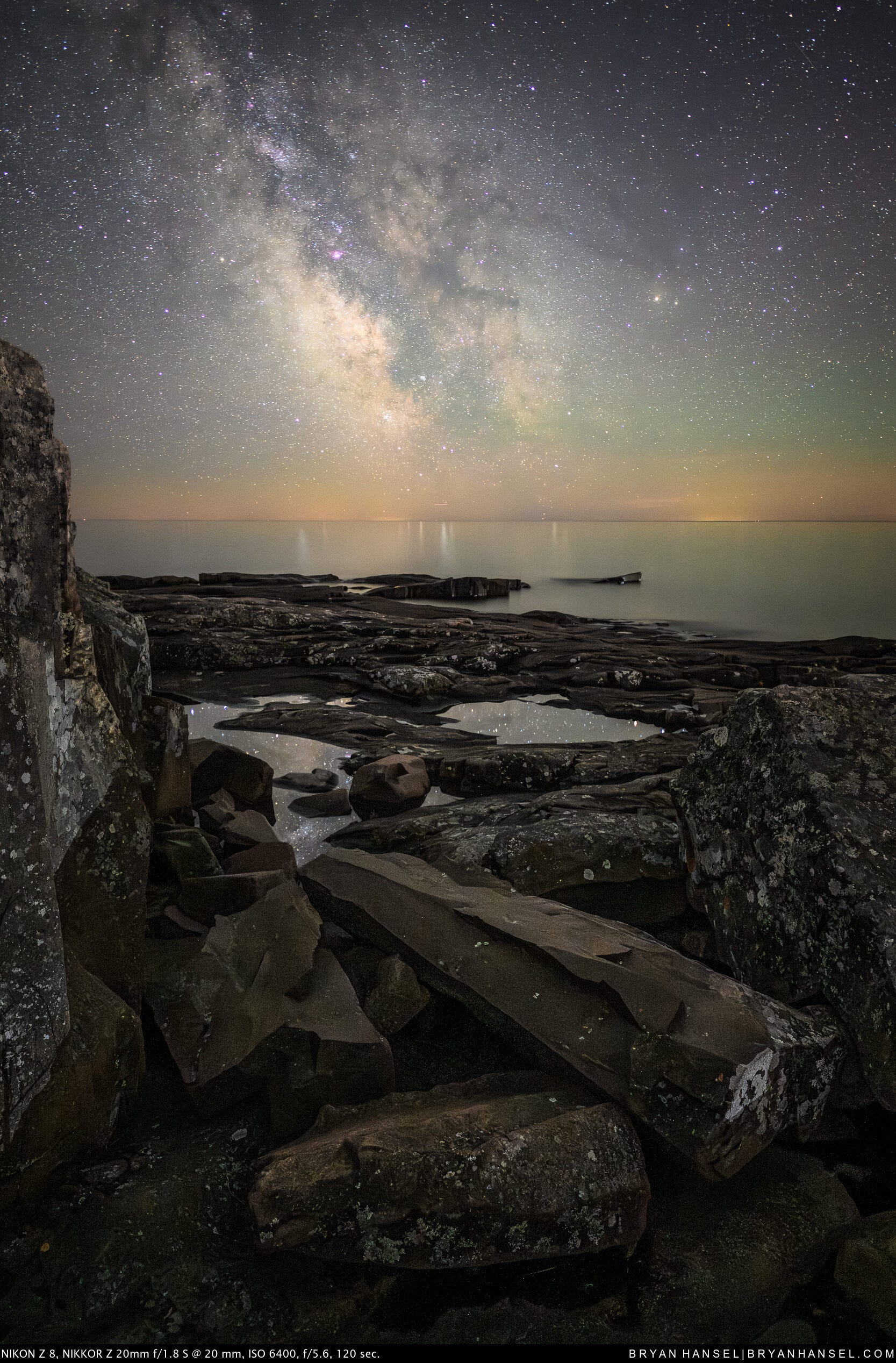
That’s the rub with Milky Way photography. It won’t be long until the next new moon. It won’t be long until the clouds go away. It won’t be long until the core sets for the season, and it won’t be long until dawn starts to turn the sky blue and the night is over.
Don’t wait too long or you’ll miss it.
Until next time
Thank you for reading another essay of mine. I hoped you enjoyed it. If you’re interested, a few of my 2027 photo workshops still have spaces (see the schedule and register here). I’ll see you again in two weeks.
Stunningly beautiful work!! Thank you.
How does one pick out the satellites?