
Winter Has Arrived
Photos of the northland during early winter

Sub-zero mornings, sea smoke, and ice. It’s why early winter is one of my favorite times to photograph Lake Superior.
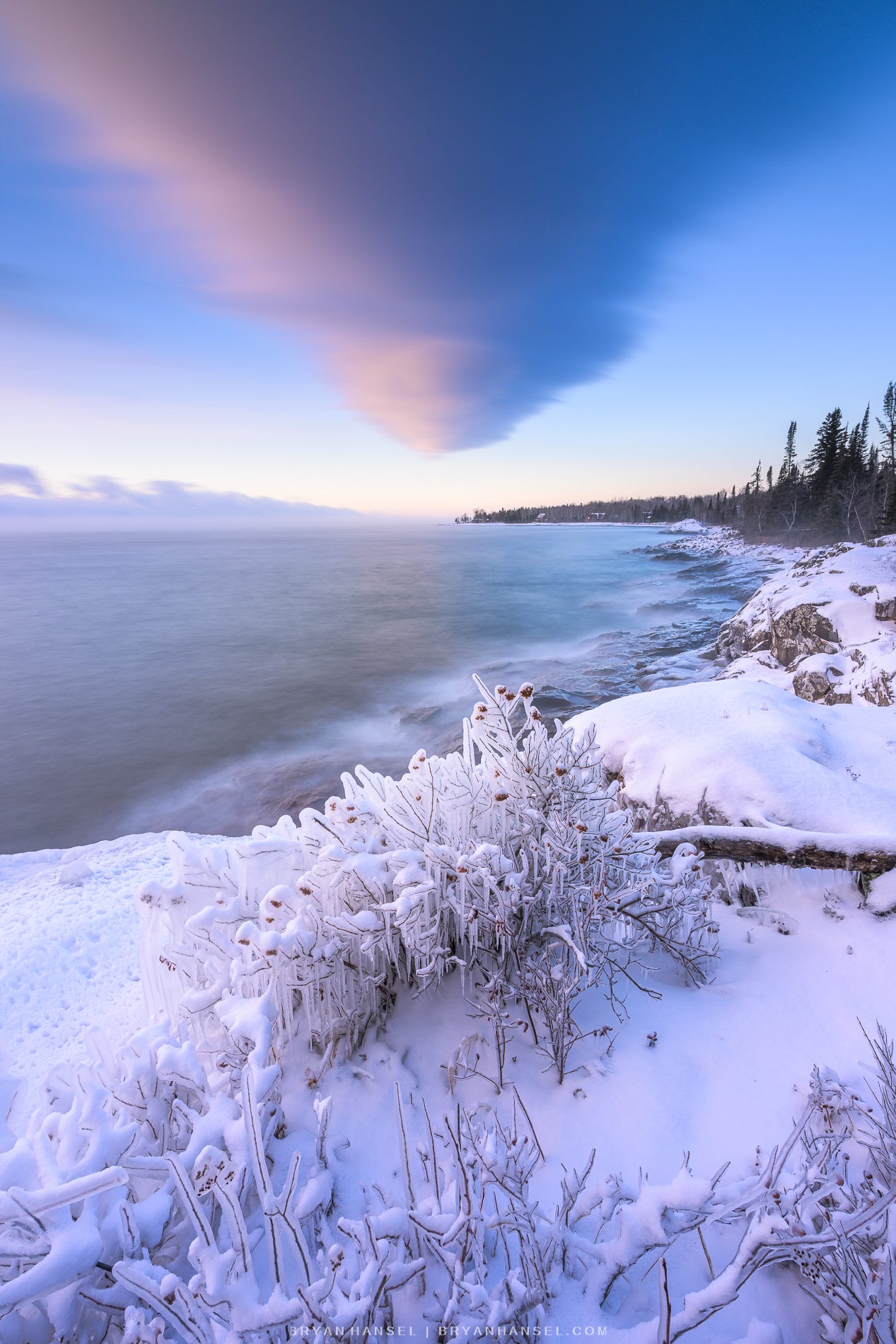
Winter arrived in northern Minnesota, and it’s awesome.
This morning it was -14°F. Recent mornings have often been below zero. Normal average temperatures for this time of year are 29°F for highs and 16°F for lows. I know most people don’t like these kinds of temperatures, but I love them. They create sea smoke on Lake Superior, and they turn the colors of winter soft and dreamy.
When the shoreline is coated with ice and snow and sea smoke rises from the open water, the subtle colors shift into shades of pastel. Waves wash against basalt and stone beaches, and Lake Superior becomes world-class for winter photography. As a bonus, from Grand Marais the sun rises and sets over the lake this time of year, giving us two chances every day to photograph winter light.
This year, early-season sub-zero temperatures combined with wind and wave directions aimed straight at the North Shore have coated shoreline plants in ice. Walking along the shore with crampons on feels like moving through an icy forest—every stem and branch frozen in place. It’s a winter wonderland, and the scenes you encounter tend to stop you in your tracks and keep your eyes on a photograph longer than you expect.
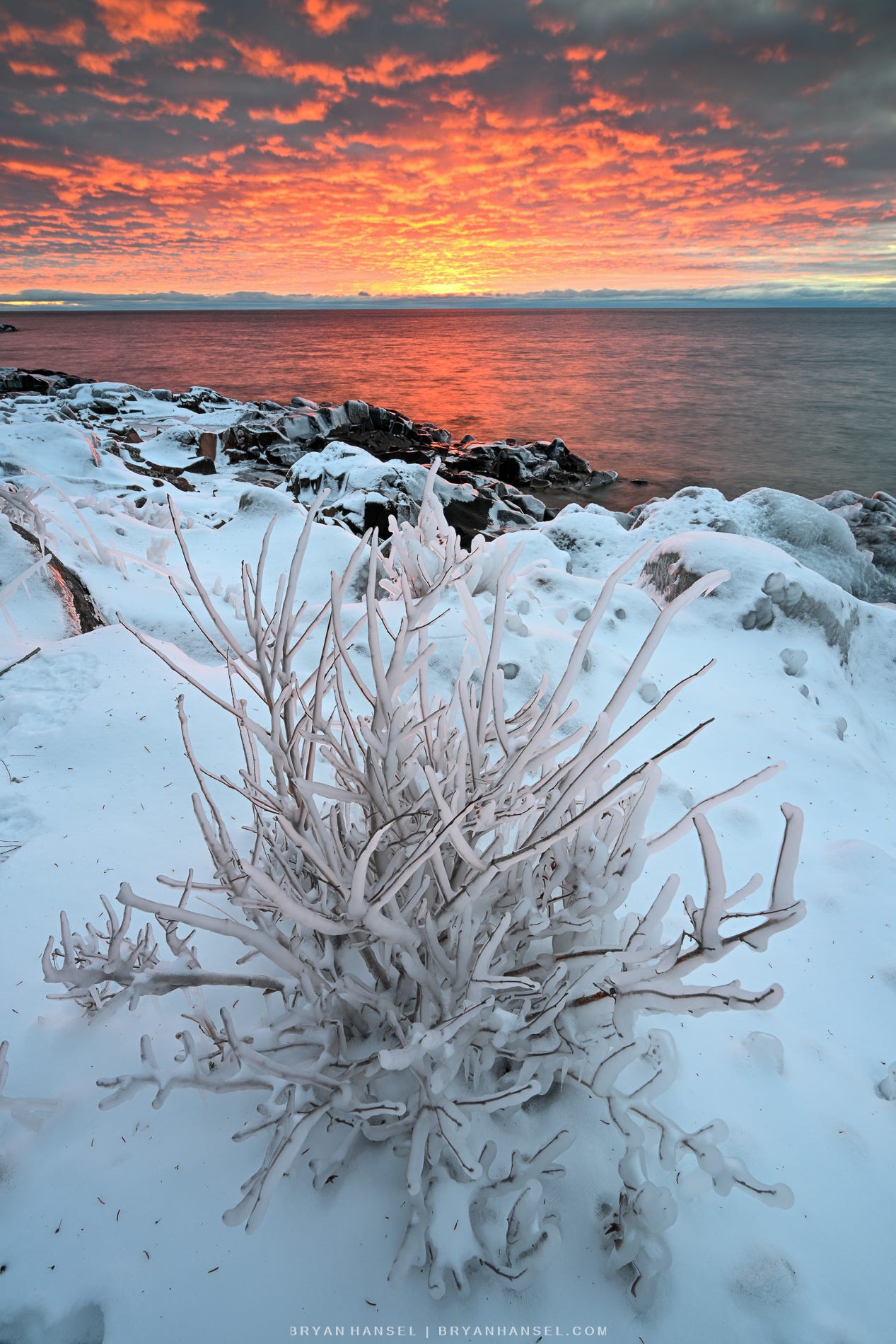
The hardest part of this kind of photography is getting a frozen subject to stand out from the uniform whiteness of snow. If the subject isn’t already glowing in sunlight, like in the photo above, a little work in the darkroom can make all the difference.
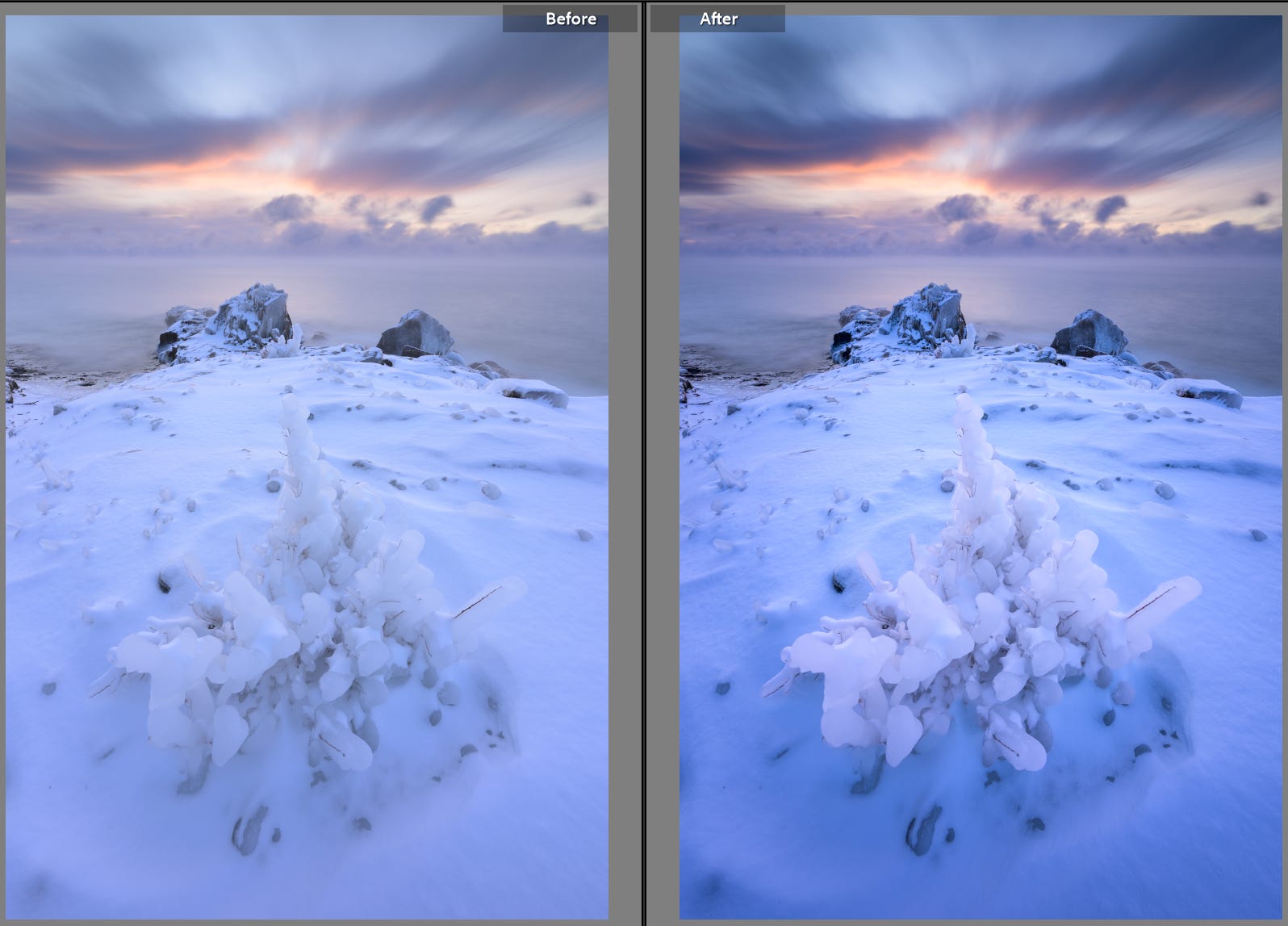
First, use an object selection or brush to select your frozen subject. Slightly warm it and nudge the white balance tint toward magenta to counter any green glow that can creep in. Make it just a touch brighter.
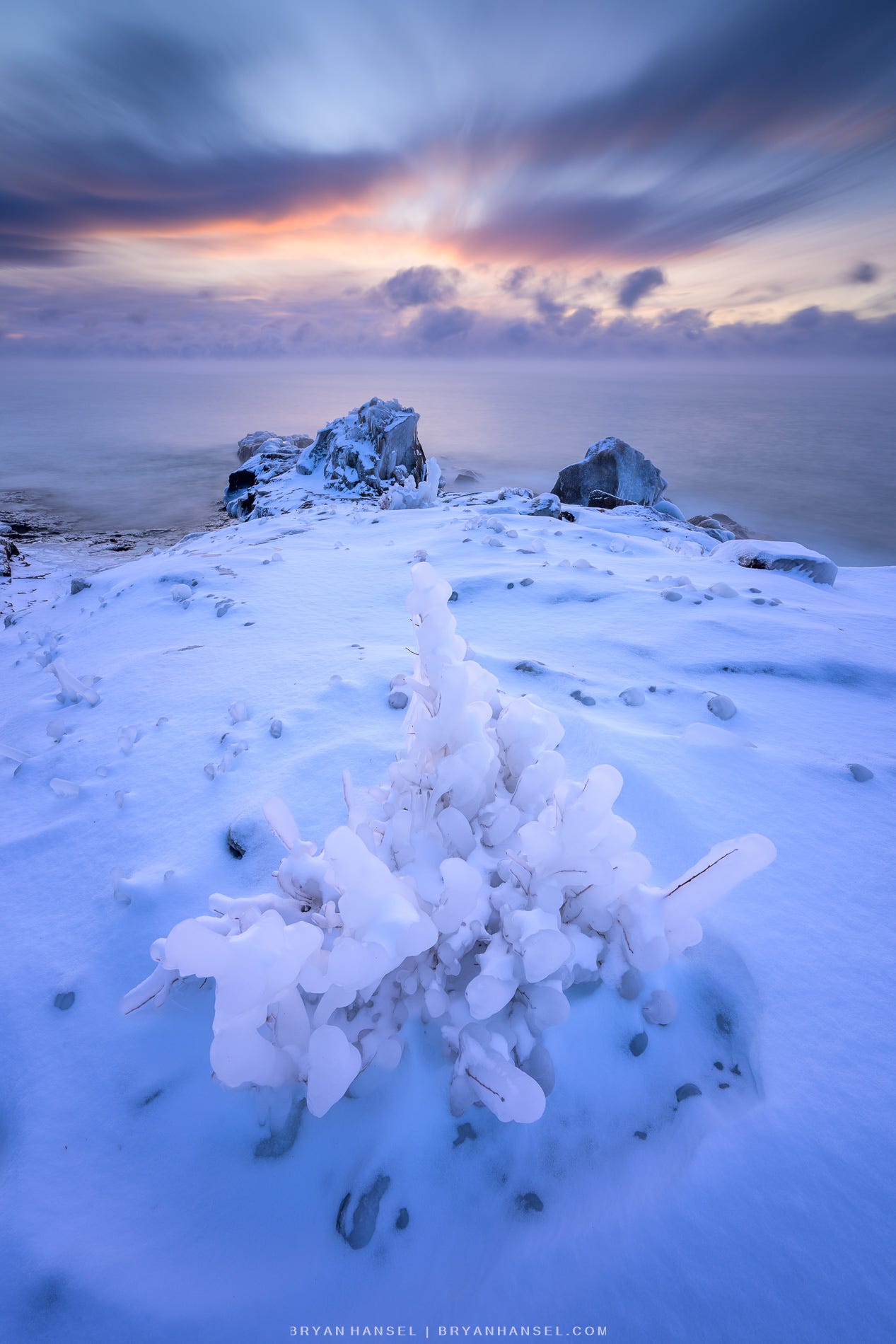
Second, select the snowy background (Lightroom Classic’s landscape masking tool usually does a good job with snow). Cool it slightly with the temperature slider and consider lowering the exposure or highlights just a bit. Trust what looks natural to your eye. These small adjustments help the subject pop off the snow, like in the photo below.
Here’s a before-and-after comparison.
One lesson I learned long ago is that ice formations like these don’t last very long. It pays to get out early and photograph them while you can. While they’re around, you never know what you’ll find. Mundane summer scenes can be instantly transformed, as in the photo below.
But, by the time most people notice these scenes, they’re already gone.
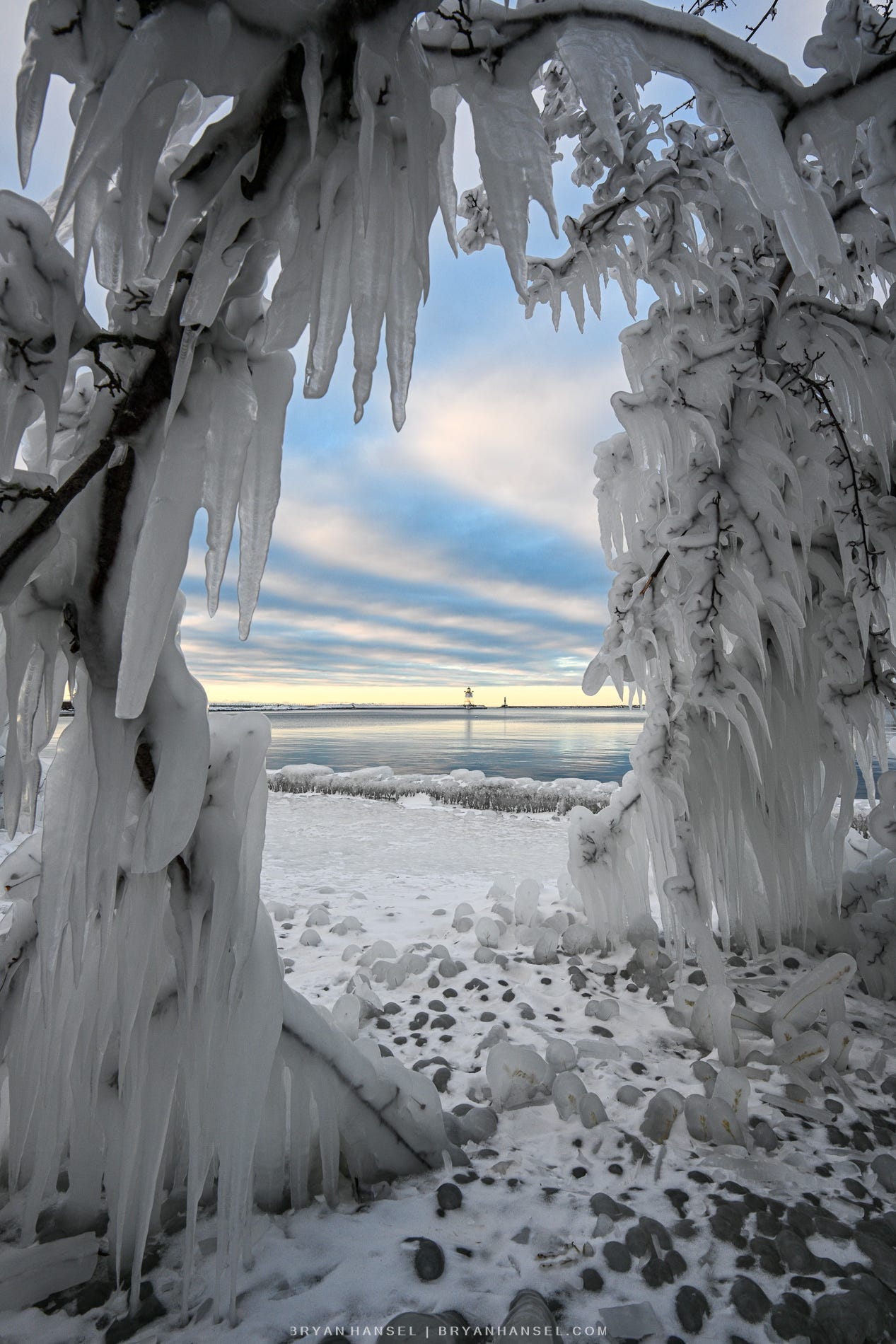
Winter doesn’t wait. A good photographer won’t either.
Until next time
Thanks for reading. I hope you enjoyed this newsletter and get a chance to enjoy winter while it lasts. And if you’d like a reminder of these moments on your wall all year, my calendars are a good place to start.
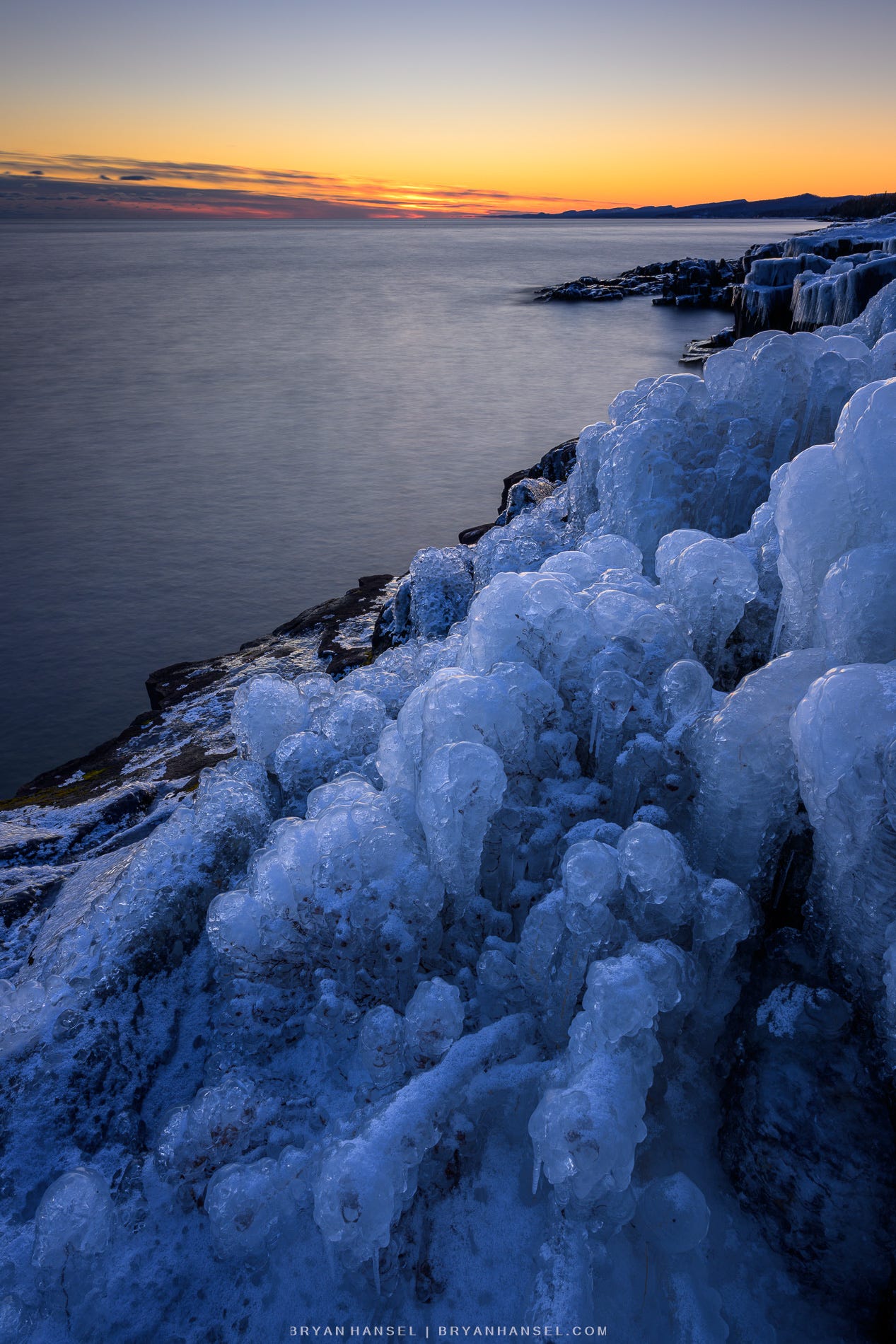
Here’s the parting photo.
I so appreciate you sharing your talent..your travels with us. I live vicariously through you, Bryan!
As always, your photos stir a combination of joy and longing in my heart. Every single one! Thanks for posting these, Brian!